'%20stroke='url(%23pc-grad)'%20stroke-width='3'%20stroke-linejoin='round'%20stroke-linecap='round'%20fill='none'%3e%3cpath%20d='M14%2012%20H46%20a8%208%200%200%201%208%208%20v14%20a8%208%200%200%201%20-8%208%20H36%20l-8%208%20v-8%20H14%20a8%208%200%200%201%20-8%20-8%20V20%20a8%208%200%200%201%208%20-8%20z'/%3e%3cpath%20d='M18%2022%20H42'%20/%3e%3cpath%20d='M18%2028%20H38'%20/%3e%3cpath%20d='M18%2034%20H34'%20/%3e%3c/g%3e%3cg%20fill='url(%23pc-grad)'%20filter='url(%23pc-glow)'%3e%3cpath%20d='M40%2038%20l10%2010%20-3%206%20-3%20-3%20-6%203%20z'%20opacity='0.95'/%3e%3ccircle%20cx='44'%20cy='49'%20r='1.5'%20fill='%230b0b14'/%3e%3c/g%3e%3c/svg%3e)
YouTube Thumbnail Prompt – Figma Complete Basics for Beginners
Cyan-lit, high-contrast thumbnail prompt for beginner Figma and design-fundamentals tutorials. Neon-green badge and floating logo accents make it ideal for entry-level UI/UX course content.
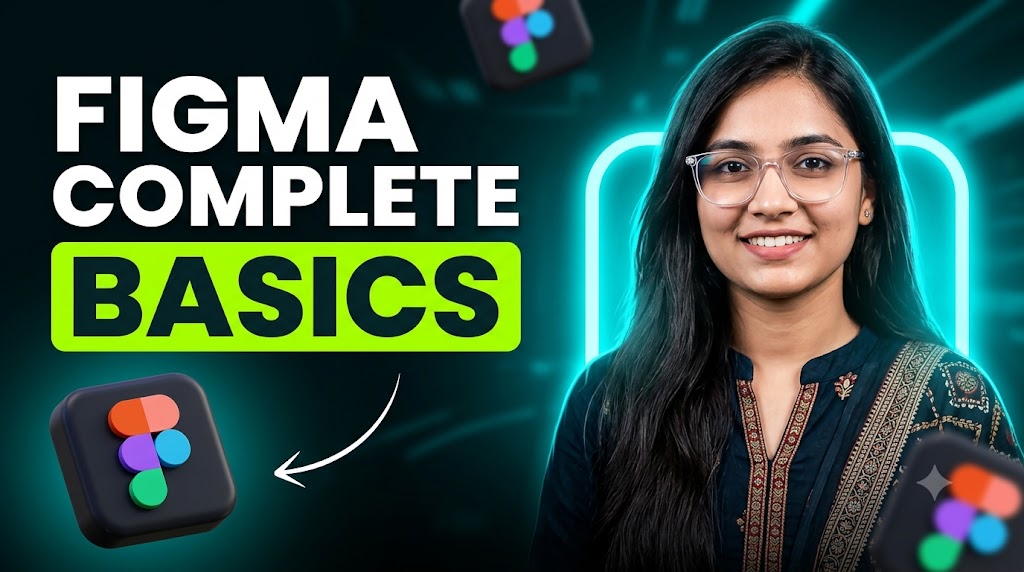
A high-impact YouTube thumbnail in 16:9 aspect ratio. On the right side, a [Subject: smiling young woman with long dark hair, wearing clear-framed glasses and a dark patterned traditional top] looking slightly toward the camera against a cyan neon glow backlighting.
 Text Overlay: On the left side, bold, high-contrast stacked typography reads:
 [Main Title Text: FIGMA] in bold white text
 [Secondary Text: COMPLETE] in bold white text
 [Highlight Text: BASICS] in bold dark text enclosed inside a bright neon green rectangular badge.
 Graphics & Icons: In the bottom left corner, a 3D dark app block featuring the [Logo: colorful 3D Figma logo] sits tilted, with a thin white curved arrow pointing down toward it from the text area. Additional subtle floating Figma logos are blurred in the top center and bottom right.
 Background & Lighting: Dark tech background with dynamic cyan and teal backlight highlights around the subject, clean high-contrast composition, sharp focus, professional digital tutorial aesthetic.
Try this prompt in
How to Use This Prompt
YouTube Thumbnail Prompt – Figma Complete Basics for Beginners is a ready-to-use AI text prompt designed for youtube-thumbnail who want consistent, high-quality results without spending hours on trial and error. Cyan-lit, high-contrast thumbnail prompt for beginner Figma and design-fundamentals tutorials. Neon-green badge and floating logo accents make it ideal for entry-level UI/UX course content.
Use this prompt whenever you need reliable written output for youtube-thumbnail workflows — typical moments include client work, content production, classroom prep, and rapid iteration on ideas. Copy the full prompt, paste it into your preferred AI tool, and replace any bracketed placeholders with your own specifics (topic, brand, subject, or constraints).
For best results, give the model a clear context line before pasting, keep your replacements concrete (numbers, names, examples), and ask a short follow-up to refine tone or length. Pair it with the customization tips below to adapt it to your exact use case.
Example Output
Expect a structured, ready-to-use response covering figma basics thumbnail, beginner design tutorial prompt, ui ux fundamentals youtube in a clear format you can paste straight into your workflow with only light edits.
Prompt Details
Customization Tips
- Replace placeholders with your actual figma basics thumbnail details for sharper, on-brand output.
- Set a target length ("respond in ~150 words" or "in 5 bullet points").
- Specify the audience reading level (beginner, expert, executive).
- Ask for the output in a specific format — table, JSON, Markdown, email.
- Add a tone instruction: friendly, formal, witty, persuasive.
- Chain a follow-up: "now rewrite for LinkedIn" or "make it 30% shorter".
- Constrain with examples — paste 1–2 samples of the style you want to match.
- Add a "do not" list to block common mistakes (no emojis, no fluff, no disclaimers).
Frequently Asked Questions
What is the "YouTube Thumbnail Prompt – Figma Complete Basics for Beginners" prompt used for?
Cyan-lit, high-contrast thumbnail prompt for beginner Figma and design-fundamentals tutorials. Neon-green badge and floating logo accents make it ideal for entry-level UI/UX course content.
Which AI models work best with this prompt?
It works across all major models, but you'll get the strongest results from GPT-4o, Claude 3.5 Sonnet, Gemini 1.5 Pro.
Is this prompt free to use?
Yes. Every prompt on PromptCraft is free, requires no signup, and can be copied with one click for personal or commercial projects.
Can I edit the prompt?
Absolutely. Treat it as a starting template — swap in your topic, audience, and tone. See the customization tips above for proven tweaks.
Why is my output different from the example?
AI models are non-deterministic — the same prompt produces variations each run. Regenerate 2–3 times and pick the strongest result, or refine with a short follow-up instruction.